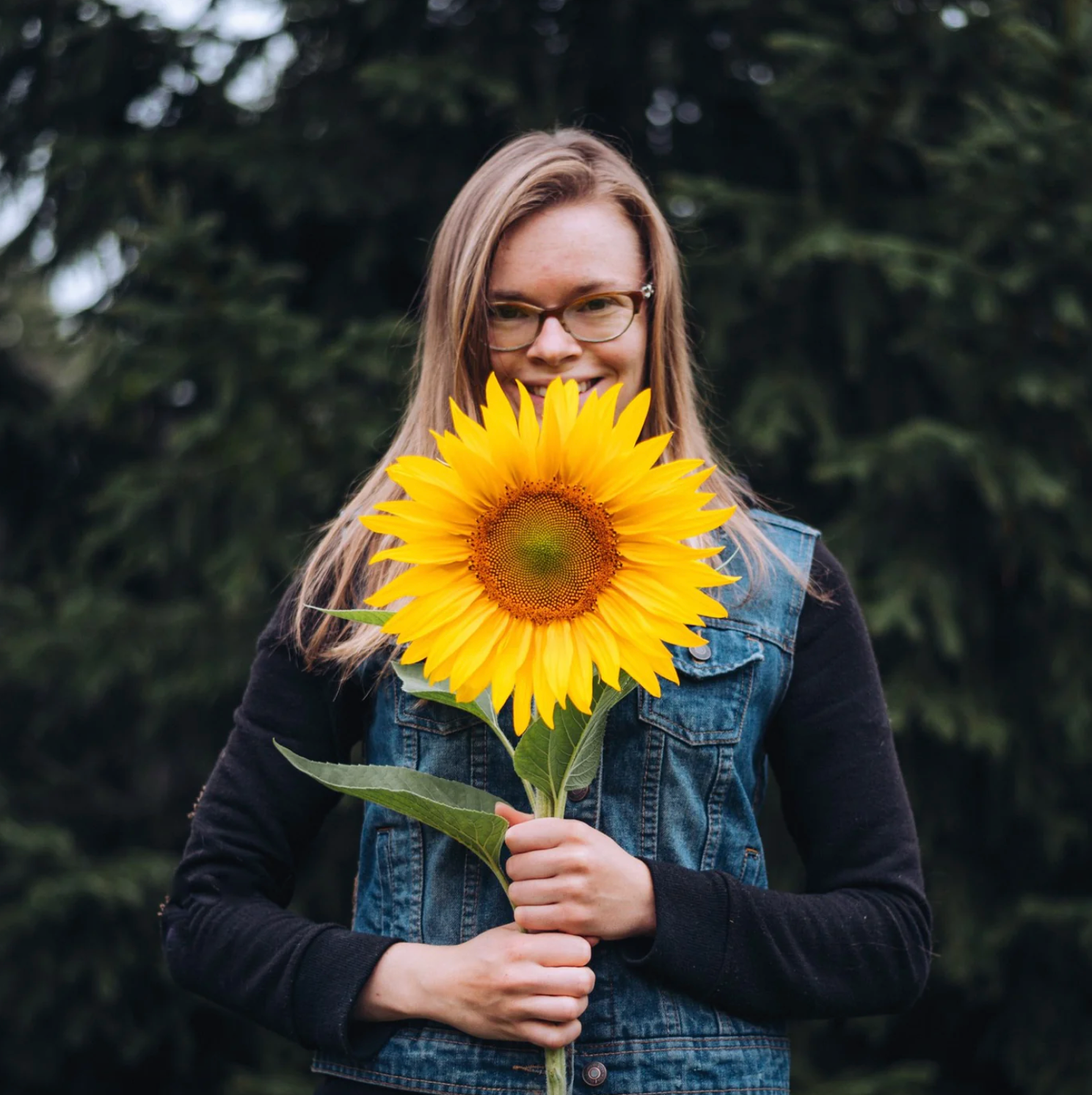
This growing season has probably taught me more about flower farming than any season before it. Some lessons have been about growing flowers, but a lot have really been about figuring out what kind of farm I can realistically run at this stage of my life. I have a four-month-old baby and a two-year-old at home, we’re a one-income family, and I’m trying to build the flower farm into a real business without spending money just because I feel like I’m supposed to have all the equipment, infrastructure and systems that a “proper” flower farm has. I’m constantly trying to balance what would be ideal with what is actually practical for me right now, and I think that has led me toward a much simpler, lower-intervention approach to growing.
I don't really have formal training
Here’s my first confession: I don’t actually have any formal flower farming or floristry training. I’ve volunteered at organic farms and spent time at a flower farm, and I have years of experience working with wedding flowers, but most of what I know about growing has come from experimenting in my own garden and watching an almost embarrassing amount of YouTube. Whenever I run into something I don’t understand, I usually end up searching for five different opinions from five different growers and then trying to figure out what might actually make sense for my own situation.
I’m still very much learning, especially when it comes to designing with dried flowers. Growing a flower is one thing, but knowing exactly how that flower is going to behave once it has been harvested and dried, and then understanding how to use it in an arrangement, is something I’m still developing an eye for. I have plenty of experience with wedding flowers, but dried flowers have their own quirks, and every growing season gives me a little more information about what I like, what works and what I would do differently next year.
I'm keeping the farm intentionally low-intervention
I’ve also realized that I’m not particularly interested in making my flower farm as complicated as it possibly could be. I’m sure there are growers who would look at my setup and immediately see ten things I could improve, and they probably wouldn’t be wrong, but right now I’m trying to build a system that I can actually keep up with while raising two little kids.
That means no irrigation system, no flower netting, no elaborate fertilizing schedule and no constant pampering of the plants. For the most part, my garden gets hand watering, hand weeding and mulch, and then I try to let the plants do what they’re going to do. There are definitely moments when I wonder if I should be doing more, especially when I see photos of incredibly productive flower farms with perfectly straight rows and enormous stems, but I also have to remind myself that my goal isn’t to recreate someone else’s farm. I’m trying to find a way of growing that works for my land, my business and my life.
There’s also a financial side to this. Since we’re a one-income family, I’m very conscious of what I spend on the farm, and I want to treat it like a business rather than a hobby where I can endlessly buy things to solve every little problem. If I can make something myself, reuse something I already have or find a simpler way of doing something, that’s usually the route I want to take. Maybe as the business grows I’ll invest in more infrastructure, but for now I’m surprisingly happy with keeping things simple.
Dried flowers feel a little bit like cheating
I’ll admit that growing flowers specifically for drying sometimes feels a little bit like cheating compared with growing fresh flowers for weddings. Fresh flowers are so demanding. There’s the timing of the harvest, conditioning, hydration, storage, refrigeration and the constant pressure of knowing that once you cut them, the clock is ticking. With dried flowers, I have so much more breathing room.
I can harvest flowers in the summer when the garden is overflowing and then actually use them months later, which makes so much sense for the kind of business I’m trying to build. I can take my time arranging them instead of trying to create everything in a tiny window before a wedding, and I don’t have to worry about whether a flower is going to start wilting while I’m working with it. There’s something really appealing about being able to grow flowers during the busiest part of the year and then turn them into finished wedding work during the quieter months.
I think that slower process is one of the things that has made me fall in love with dried flowers so much. They’re much more forgiving, and when you’re trying to run a small farm around family life, forgiving is a very good quality.
I don't mind growing short flowers
Another thing I’ve had to change my thinking about is stem length. I know that if I were primarily growing for wholesale, I would probably be much more concerned about getting long, straight, uniform stems, because that’s what makes a flower useful to a florist buying individual stems. But that isn’t really what I’m doing right now.
I’m growing flowers with the intention of eventually turning them into finished wedding pieces, which means I can be a lot more flexible about what makes a flower “good.” A short stem might not be particularly exciting if you’re selling bunches of flowers by the stem, but it can be completely useful in a boutonniere or corsage, and sometimes a shorter stem is exactly what I need when I’m arranging a bouquet. As long as the flower itself is beautiful and usable, I don’t necessarily see it as a failure just because it didn’t grow six feet tall.
Of course, I still get excited when I pull out a really long, beautiful stem, but I’ve stopped feeling like every short flower is something I did wrong. Since I’m selling the finished product rather than the individual stem, I have a little more freedom to work with what the garden gives me.
Mulch was probably the best thing I did this year
If I had to pick one thing that made the biggest difference to my garden this year, it would probably be mulch, which is funny because it’s also one of the least exciting things to talk about. I don’t have some impressive irrigation system or expensive piece of farm equipment to credit; I just put down a lot more mulch, and it made my life considerably easier.
My soil is heavy clay, and it can be frustrating to work with. When we get a heavy rainfall, I can have a lot of runoff, and then once the rain stops the surface of the soil can dry out and harden. Since I’m hand watering, I also need the soil to hold onto that moisture for as long as possible instead of drying out immediately. The mulch has helped with all of these things while also dramatically cutting down on the amount of hand weeding I need to do.
And for me, saving time is huge. I don’t have endless hours to spend in the garden, so anything that reduces the amount of maintenance I have to do is incredibly valuable. I would much rather spend an hour harvesting flowers or working on an arrangement than spend that same hour crawling around pulling tiny weeds out of a bed.
I'm learning that a successful farm doesn't have to look perfect
I think the biggest thing I’m taking away from this season is that I’m slowly letting go of the idea that my farm has to look a certain way in order to be successful. There’s so much beautiful flower farming content online that it’s very easy to look at someone else’s perfectly straight rows, huge stems, irrigation systems and incredibly productive gardens and wonder what you’re doing wrong.
But I’m learning that there are a lot of different ways to grow flowers, and the “right” way is probably the one that works for your particular circumstances. Right now, I’m a mom with two very young children, I’m building a small business on one income, I’m growing in heavy clay soil, and I’m trying to keep the farm as simple as possible. My version of flower farming is inevitably going to look different from someone who has a team of employees, twenty years of growing experience and a dedicated commercial flower farm.
I’m okay with that.
There are still so many things I want to learn, and I’m sure I’ll change how I do things as the farm grows. I’ll probably experiment with new varieties, change how I plant certain crops, find better ways to harvest and dry everything, and hopefully become a much better designer of dried flowers along the way. But for now, I’m trying to pay attention to what works rather than constantly worrying about everything I could be doing better.
Maybe that’s the real lesson from this growing season. A flower farm doesn’t have to be perfect to produce beautiful flowers, and it doesn’t have to be complicated to be a business. Sometimes the simplest systems are the ones that actually make it possible to keep going.