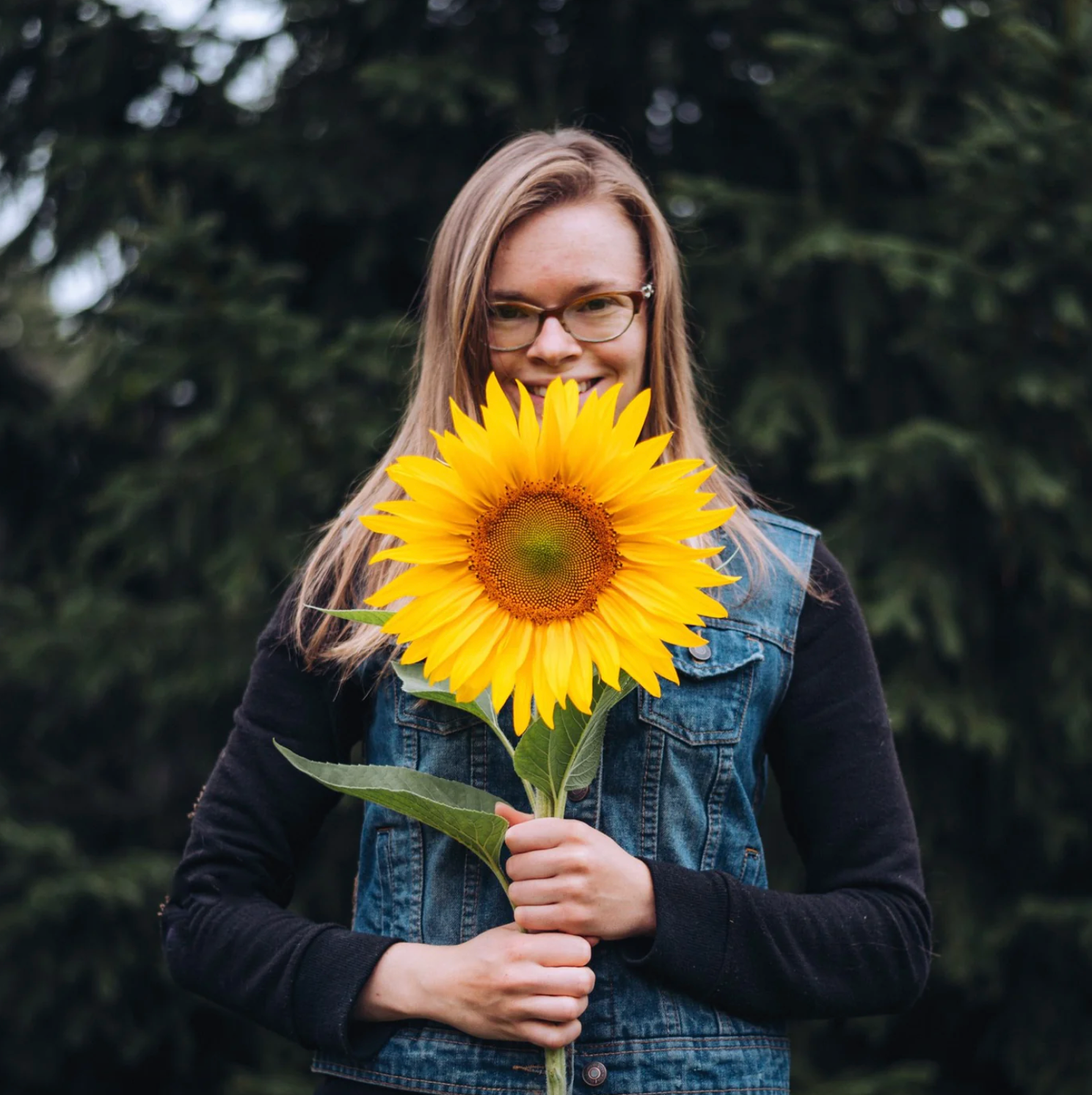

Hey, I’m Sarah from Harvest Hill Flower Farm, where I grow and specialize in dried flowers here in Ontario. One of the questions I get from other flower farmers is how I ship dried flowers without spending a fortune on packaging or having everything arrive crushed. If you’re thinking about adding dried flowers to your farm business and selling to customers outside your local area, shipping can feel a little intimidating at first, but I’ve found that it really doesn’t have to be complicated.
Dried flowers are actually fairly well suited to shipping once you figure out how to package them. Every order is a little different depending on the variety, length and quantity of flowers, but I generally start by protecting the flower heads with paper bags. I use different sizes depending on the bunch, placing the bag over the top portion of the flowers so there is a little pocket of air around them. You can also simply wrap the flowers in paper, but I like having that extra bit of space around the flower heads because it gives them some protection from getting crushed against the box or other flowers during transit.
The next thing I focus on is making sure the flowers can't move around inside the box. I use crumpled paper and other paper packing materials to fill the empty spaces and keep everything snug. The goal isn't to pack the box as tightly as possible, but to prevent the flowers from sliding around every time the box is moved. For particularly long or delicate bunches, another option is to poke two small holes in the bottom of the box and use a zip tie to secure the stems in place. I don't necessarily do this for every order, but it's a useful option when you really want to make sure a bunch stays exactly where you put it.
Here’s a video showing how I package my dried flowers for shipping
I also try to keep my packaging as simple as possible. It might not look like the fancy packaging you see from some larger businesses, but I would much rather put that money into growing flowers than into packaging that is going to be thrown away. I save and reuse boxes, newspaper, paper bags and other clean packing materials whenever I can. For me, this makes sense both financially and environmentally. Flower farming already requires a lot of inputs, and finding ways to reuse materials is one small way I can keep my costs down and reduce unnecessary waste at the same time.
Shipping costs are another big consideration when you're selling flowers from a small farm. Depending on where you live, shipping can quickly become one of the biggest expenses associated with an order, particularly when you're sending long stems that require a larger box. I’ve found that it is worth spending some time comparing shipping options rather than simply using the standard retail rate. Depending on your location and the shipping platform or online store you use, you may have access to discounted business rates or negotiated shipping rates that are considerably lower than what you would pay at the counter. I recommend checking several options and comparing the actual cost based on the box dimensions, weight and destination. Sometimes a slightly different box size can make a surprisingly big difference.
I also recommend figuring out your packaging and shipping costs before setting your prices. It’s easy to think about the cost of growing the flowers, harvesting them and preparing an order, while forgetting about the box, packing materials, labels and shipping fees that come afterward. When you’re working with the relatively small margins of a flower farm, those costs add up quickly. I try to look at the entire process from seed to customer and find little ways to save money wherever I can. Saving a few dollars on packaging or shipping might not seem significant on one order, but over the course of a season it can add up to money that can go right back into the farm.
If you’re a flower farmer considering selling dried flowers online, I really do encourage you to give shipping a try. You don't need a complicated packaging system or expensive custom boxes to get started. Use the materials you already have, experiment with different ways of protecting your flowers, and pay attention to what arrives in good condition and what doesn't. Over time, you'll develop a system that works for your flowers, your customers and your budget. For me, the goal is pretty simple: protect the flowers, keep the packaging practical, avoid unnecessary waste and save as much as I can on shipping so more of the money from each order can stay in the farm.